
What Happens During a TSCM Bug Sweep?
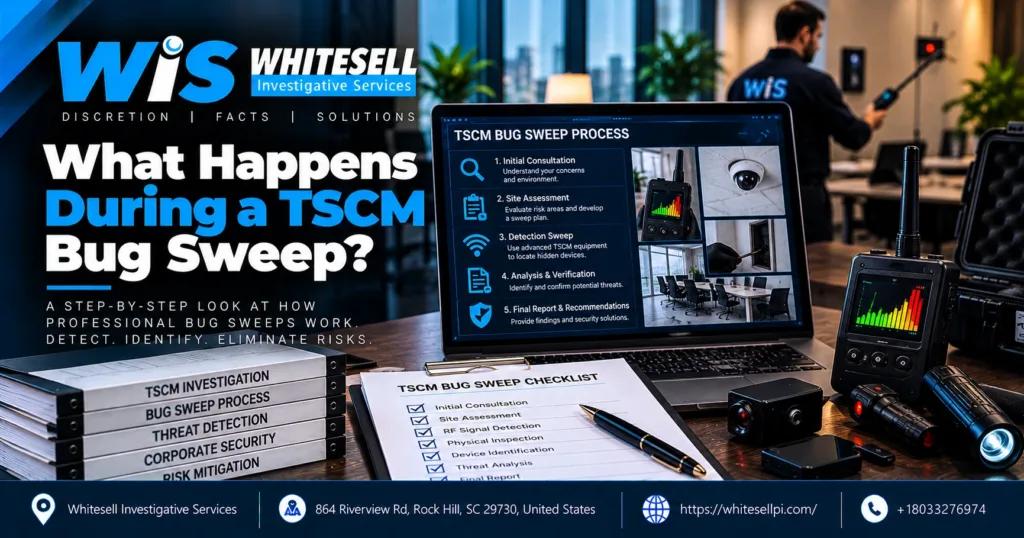
During a TSCM bug sweep, a trained professional examines a location for signs of unauthorized surveillance using physical inspection, radio-frequency analysis, and other technical checks. The process is designed to identify suspicious devices, signals, wiring, or vulnerabilities that could compromise private conversations or sensitive information.
A professional sweep usually begins with a risk assessment and review of the space before technical testing starts. The investigator then examines priority areas systematically, evaluates unusual findings, documents results, and provides recommendations based on the conditions observed during the inspection and the client’s specific security concerns.
What Does TSCM Mean?
TSCM stands for Technical Surveillance Countermeasures. It describes professional methods used to detect, evaluate, and reduce technical surveillance risks in offices, meeting rooms, residences, vehicles, and other sensitive environments.
A TSCM inspection is commonly called a bug sweep, but the process can involve more than searching for hidden microphones.
Depending on the circumstances, the assessment may consider unauthorized transmitters, concealed electronic devices, suspicious wiring, altered equipment, cameras, and other potential surveillance concerns.
Professional TSCM work combines equipment with investigative judgment.
Modern offices and homes contain legitimate wireless signals, Bluetooth devices, networking equipment, smart electronics, security systems, and building technology. Detecting electronic activity does not automatically mean surveillance has been discovered.
The examiner must determine whether a finding is normal, unexplained, or potentially suspicious.
TSCM is therefore a structured technical assessment rather than a simple scan with one detector. The inspection scope should reflect the location, perceived threat, confidentiality needs, and specific concerns that prompted the sweep.
What Happens Before a Bug Sweep Begins?
Preparation starts before technical equipment is used.
The TSCM professional first needs to understand why the client requested the sweep. A concern about leaked executive discussions may require a different approach from a routine preventive inspection before confidential negotiations.
The client may be asked about unexplained disclosures, suspicious objects, unauthorized access, recent maintenance, construction, visitors, employee changes, or other unusual events.
The examiner also needs to understand the physical environment.
Important details can include the number of rooms, building layout, areas used for sensitive conversations, communications equipment, access controls, and normal electronic devices.
Clients should avoid unnecessarily announcing the planned sweep.
If unauthorized surveillance is genuinely suspected, discussing the inspection widely or inside the affected space could change the environment before it can be assessed.
Normal conditions can be valuable to the examiner.
Equipment should not be dismantled or suspicious objects moved simply to prepare for the inspection. The professional should see relevant areas as close as reasonably possible to their existing condition.
How Is a Pre-Sweep Risk Assessment Conducted?
A pre-sweep risk assessment helps determine where the inspection should concentrate and what types of surveillance concerns are most relevant.
The examiner may ask what information needs protection, who normally has access to it, and where sensitive conversations take place.
Access history is important.
A conference room regularly entered by visitors, maintenance personnel, contractors, or outside vendors may present different risks from an executive office with tightly controlled access.
Recent events can also influence priorities.
A break-in, office renovation, employee departure, contentious business dispute, sensitive transaction, or unexplained information leak may provide context for deciding which spaces require closer examination.
The assessment does not presume that surveillance is occurring.
Its purpose is to identify realistic vulnerabilities and establish an efficient inspection plan.
The examiner may also identify normal sources of electronic activity before testing begins. Knowing which wireless networks, access systems, audiovisual products, and office devices are authorized can make unexplained activity easier to evaluate.
A focused assessment helps direct technical resources toward the areas that matter most.
What Does the Physical Inspection Include?
The physical inspection is an important part of a professional TSCM sweep because surveillance equipment may be concealed within ordinary surroundings.
The examiner visually evaluates the room and relevant equipment for modifications, unfamiliar components, unexplained wiring, unusual openings, or objects that appear inconsistent with the environment.
Fixtures and Furniture
Depending on the assignment, attention may be given to desks, conference tables, chairs, shelving, decorative objects, wall fixtures, ceiling areas, and other locations near sensitive conversations.
Electrical and Communications Areas
Outlets, adapters, cables, telephone equipment, audiovisual systems, and related infrastructure may warrant examination when appropriate.
Unfamiliar Objects
An object that employees cannot identify may require closer evaluation, but unfamiliar does not automatically mean suspicious.
Buildings contain legitimate sensors, networking products, security equipment, and maintenance devices.
The physical inspection works alongside electronic testing. A device may not be actively transmitting during the sweep, which is one reason a professional assessment should not depend entirely on detecting a radio signal.
How Are Radio-Frequency Signals Checked?
Radio-frequency analysis is used to evaluate signals present within or around the area being inspected.
Many surveillance devices can communicate wirelessly, but offices also contain numerous legitimate radio-frequency sources. Wi-Fi networks, mobile phones, Bluetooth devices, wireless peripherals, access controls, and building systems can all generate signals.
The challenge is not simply detecting radio-frequency energy.
The examiner must evaluate what is expected and determine whether any signal warrants additional investigation.
A professional may use specialized equipment to observe radio-frequency activity across relevant frequency ranges and investigate unusual signal characteristics.
Findings are considered in context.
A detected signal might originate from authorized equipment inside the room, a neighboring office, infrastructure elsewhere in the building, or another legitimate source.
Signals can also appear intermittently.
For that reason, radio-frequency testing is one component of the overall TSCM process rather than proof by itself that an area is secure or compromised.
Suspicious activity should be correlated with physical findings, known equipment, and other technical information before conclusions are reached.
What Other Electronic or Technical Checks May Be Performed?
Additional technical checks depend on the environment, identified risks, and equipment available to the TSCM professional.
The examiner may evaluate electronic components or infrastructure that could support unauthorized surveillance.
Some inspections may include methods designed to identify electronic devices even when those devices are not actively transmitting at the moment they are examined.
Telephone, communications, networking, audiovisual, or electrical systems may receive attention when they are relevant to the suspected threat.
The inspection may also consider whether equipment has been modified or whether unfamiliar components have been introduced into the environment.
No single tool can identify every possible surveillance method.
Effective TSCM work uses several complementary techniques because devices can operate differently. Some transmit continuously, some communicate intermittently, and others may store information rather than broadcasting it immediately.
The examiner must interpret technical results rather than treating every response as evidence of a bug.
The specific procedures used should reflect the environment and remain proportionate to the risks identified during the preliminary assessment.
How Are Suspicious Findings Documented?
Suspicious findings should be documented carefully before unnecessary changes are made to their condition.
Documentation may include the location, appearance, surrounding environment, time discovered, and technical observations associated with the finding.
Photographs can provide a useful visual record when they can be taken safely and appropriately.
The examiner may also document why an item deserves further evaluation.
A device should not be labeled unauthorized surveillance simply because it looks unfamiliar. Verification may require additional inspection, comparison with legitimate building equipment, or consultation with the client’s technology or facilities personnel.
The distinction between an anomaly and a confirmed surveillance device is important.
Professional reporting should clearly explain what was observed and what remains uncertain.
Documentation also becomes important if attorneys, corporate security personnel, or law enforcement later need to review the matter.
Maintaining an accurate record of the discovery helps those parties understand the original circumstances instead of relying on recollections after equipment has been moved, disconnected, or examined by multiple people.
What Happens If a Possible Surveillance Device Is Found?
If a possible surveillance device is discovered, the first priority is usually to avoid unnecessary handling.
Immediately removing, dismantling, disconnecting, or testing the item can change its condition and potentially affect information that may later be important.
The appropriate response depends on the circumstances.
The TSCM professional may document the device and its location, restrict unnecessary access to the area, and discuss next steps with authorized representatives.
If the finding suggests potentially unlawful activity, legal counsel or law enforcement may need to become involved.
Businesses should avoid publicly accusing a particular employee, visitor, competitor, or other person based solely on the discovery of suspicious equipment.
Determining who installed a device, when it was installed, and why can require a separate investigation.
Evidence handling should be deliberate.
If authorities may become involved, preserving the condition of the item and documenting who handled it can become particularly important.
The objective is to protect the client while preserving available facts for appropriate investigation.
What Happens After the Sweep Is Completed?
After the inspection, the TSCM professional should explain significant findings and any limitations affecting the assessment.
The client may receive a verbal briefing, written report, or both, depending on the scope of the engagement.
The report can describe the areas inspected, relevant observations, identified anomalies, resolved concerns, and recommendations requiring further attention.
A sweep that does not identify unauthorized surveillance equipment can still provide useful information.
The inspection may reveal physical access weaknesses, unexplained equipment, poor control over conference spaces, or security practices that increase exposure to future surveillance risks.
Clients should understand that a TSCM sweep reflects the environment during the period inspected.
No responsible provider should promise permanent protection or claim that one inspection eliminates every possible surveillance risk indefinitely.
Changes in personnel, equipment, access, construction, and business circumstances can alter the environment later.
Organizations with significant confidentiality needs may therefore consider TSCM as one part of an ongoing security program rather than a single corrective event.
What Security Recommendations May Follow a TSCM Sweep?
Recommendations following a sweep should address vulnerabilities identified during the assessment rather than relying on generic security advice.
Physical access may be one area requiring improvement.
Businesses might need stronger controls for executive offices, conference rooms, telecommunications areas, or spaces regularly entered by outside contractors.
Visitor and maintenance procedures may also deserve review.
Organizations should know who can access sensitive rooms, why access is required, and whether equipment installations or repairs are appropriately documented.
Information security can be another consideration.
TSCM addresses technical surveillance risks, but confidential information can also leave an organization through compromised accounts, insecure networks, careless document handling, or unauthorized disclosure.
Businesses handling highly sensitive information may consider periodic reassessment based on their threat profile.
Sweeps may be appropriate before major negotiations, litigation strategy meetings, acquisitions, executive sessions, or other confidential events.
The objective is not to create unnecessary alarm. Practical recommendations should reduce identifiable exposure while supporting normal business operations and protecting sensitive conversations.
FAQs
How long does a professional TSCM bug sweep take?
The time required depends on the size and complexity of the location, number of rooms, amount of electronic equipment, identified risk, and inspection scope. A professional should evaluate the environment before providing a realistic timeframe.
Should an office be empty during a bug sweep?
Access requirements vary by assignment. Limiting unnecessary activity can make the inspection easier and protect confidentiality. The TSCM professional can explain which employees, security personnel, or facility representatives should remain available.
Can a TSCM sweep detect every hidden listening device?
No inspection can responsibly guarantee detection of every possible surveillance method under every condition. Professional TSCM uses multiple inspection techniques to identify and evaluate relevant technical surveillance risks within the agreed scope.
Can a bug sweep find devices that are turned off?
Certain inspection methods may help identify electronic components that are not actively transmitting. Detection depends on the device, its location, construction, available equipment, and inspection conditions.
Should suspicious equipment be removed before the sweep?
Generally, avoid moving or dismantling suspicious equipment without appropriate guidance. Document where it was found and preserve its condition. A professional can determine how the item should be evaluated and whether additional parties should become involved.
How often should a business schedule TSCM sweeps?
There is no universal schedule. Frequency depends on confidentiality needs, threat exposure, access patterns, sensitive events, previous concerns, and organizational risk. Some businesses use periodic assessments while others schedule sweeps around specific high-risk events.
Key Takeaways
A professional TSCM bug sweep combines risk assessment, physical inspection, radio-frequency analysis, and other technical checks to evaluate possible surveillance concerns. The process begins by understanding the environment and identifying sensitive areas before equipment testing starts. Suspicious findings should be verified, documented, and preserved rather than immediately dismantled or labeled as surveillance devices. If a serious concern is discovered, legal counsel or law enforcement may need to become involved. After the inspection, businesses should review findings, understand limitations, and address physical, technical, or procedural vulnerabilities identified during the assessment.
Turn TSCM Findings Into Practical Security Decisions
A TSCM sweep should provide more than a quick scan of a room. At Whitesell Investigation Services, we approach each assessment by first understanding the client’s concerns, identifying sensitive areas, and applying appropriate physical and technical inspection methods.
We can help businesses evaluate suspected surveillance concerns, document relevant findings, and identify security issues that may deserve additional attention. Whether the need follows an unexplained information leak or arises before a sensitive business event, we can discuss the circumstances discreetly and determine whether a professional TSCM sweep is an appropriate security measure.